Moon Howls and Midnight Zoomies: The Lunar Forces Secretly Running Your Dog's Sleep Schedule

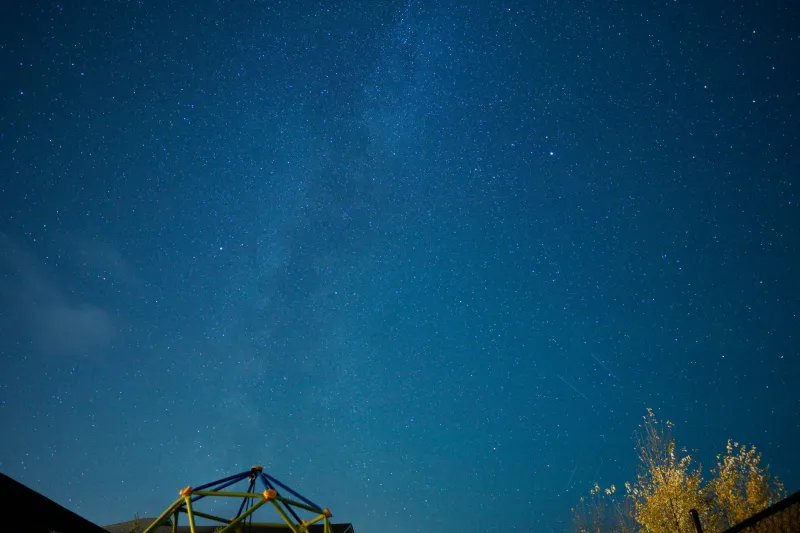
Photo: Basile Morin, CC BY-SA 4.0, via Wikimedia Commons
It's 2:47 a.m. on a Tuesday. You are deeply, blissfully asleep. And then — whomp — something that weighs forty-two pounds and smells like corn chips launches itself directly onto your sternum. Your dog is awake, alert, and apparently convinced that now is the ideal moment to sprint laps around your bedroom.
You look out the window. The moon is enormous. Radiant. Smugly full.
Coincidence? According to a growing body of research — and a whole lot of bleary-eyed dog owners across the United States — maybe not.
The Science of Selene and Snouts
The moon has been messing with Earth's biological rhythms since long before dogs were domesticated, long before humans were even walking upright. Tidal forces, gravitational pulls, and light cycles have quietly shaped the behavior of countless species — from coral reefs that spawn on lunar cues to sea turtles that navigate by moonlight.
So why would dogs be exempt?
A landmark study published in the journal Veterinary Evidence examined over 1,000 canine patients and found a statistically significant spike in emergency vet visits during full moon phases. Dogs were more likely to present with bite wounds, trauma, and seizure activity during those lunar peaks. Researchers were careful not to scream "the moon is haunted" from the rooftops, but they did acknowledge that lunar cycles appeared to correlate with behavioral changes in dogs in ways that warranted further investigation.
More recently, a Swiss study analyzing canine sleep patterns found that dogs slept roughly 5% less during full moon nights and took longer to enter REM sleep. Five percent might sound trivial until you remember that you, personally, have been awoken by a dog doing parkour at 3 a.m. at least once in the past month.
Melatonin, Moonlight, and the Mystery of the Midnight Zoomies
Here's where it gets cosmically interesting. Dogs, like humans, regulate sleep through melatonin — the hormone that tells the brain it's time to power down. Melatonin production is directly influenced by light exposure. Less light equals more melatonin equals sleepy dog. More light equals less melatonin equals a dog who has decided to excavate your couch cushions at midnight.
A full moon is genuinely bright. On a clear night, it can cast enough light to read by, which means it's absolutely casting enough light through your bedroom curtains to confuse your dog's ancient, pre-domestication brain into thinking dawn is happening. Their ancestors didn't have blackout curtains. Their ancestors also didn't have TikTok, but that's a different article.
The lunar light hypothesis suggests that full moons effectively trick a dog's circadian rhythm into a partial reset — pushing their internal clock forward, shortening sleep cycles, and triggering the kind of low-grade hypervigilance that served wild canines well when predators were a genuine concern. Your Goldendoodle doesn't have predators. But her nervous system doesn't entirely know that.
Planetary Movements: Astrology's Weird Scientific Cousin
Now, before you dismiss the planetary angle entirely, let's talk about gravitational biology — which is a real field of study and not something we made up to justify this article's existence.
Jupiter and Saturn exert measurable gravitational influence on Earth's tidal patterns. These aren't mystical forces; they're physics. And while a planet 390 million miles away isn't going to yank your Beagle off the couch with tidal force, some researchers in the field of chronobiology — the study of biological timing — have proposed that subtle electromagnetic and gravitational fluctuations tied to planetary alignment may influence circadian rhythms in sensitive organisms over long periods.
Is your dog a sensitive organism? Have you met your dog?
Astrologers have long associated certain planetary transits with restlessness, heightened energy, and erratic behavior — in people and in pets. Mercury retrograde, that beloved cultural scapegoat, is traditionally linked to disrupted communication and chaotic energy. Whether or not you subscribe to the astrological framework, the anecdotal pile of dog owners reporting bizarre behavior during retrograde periods is, at minimum, entertaining and, at maximum, genuinely curious.
What to Actually Do With This Information
Okay, so the moon might be low-key scheduling your dog's chaos. Here's how to work with the cosmos rather than against it.
Track the lunar calendar. Keep a simple log of your dog's sleep quality and energy levels against the moon phase for a month. You don't need to become a full astrologer. You just need a notes app and a willingness to write "dog absolutely feral tonight, full moon" on a semi-regular basis.
Adjust evening exercise before full moons. If your dog tends to peak in energy during lunar highs, front-load their physical activity. A longer walk or an extra play session before sunset can burn off enough energy that the moon's influence hits a slightly more tired target.
Consider light management. Blackout curtains aren't just for human insomnia. Reducing the amount of moonlight flooding your bedroom can genuinely help stabilize your dog's melatonin cycle during peak lunar brightness.
Talk to your vet about sleep disruption. If your dog's lunar-linked restlessness is severe or accompanied by anxiety symptoms, that's worth a conversation with your veterinarian. There are behavioral and supplemental approaches that can help, and your vet will probably appreciate that you've been tracking patterns rather than just saying "he's being weird."
The Bigger Picture in the Night Sky
There's something genuinely poetic about the idea that your dog — descended from wolves who once howled at the full moon in open wilderness — still carries that ancient lunar sensitivity in their bones. Domestication changed a lot about dogs. It gave them cozy beds and subscription treat boxes and tiny Halloween costumes. But it didn't fully erase the cosmic clock ticking quietly inside them.
The next time your dog wakes you up at an ungodly hour with inexplicable energy, glance out the window before you groan. If the moon is hanging up there, round and luminous and utterly unbothered, consider the possibility that your dog isn't being difficult. They're just answering a call that's older than either of you.
The universe is vast, and it is apparently still very much in your dog's group chat.